
Estimate whether your hidden training drag has already crossed six figures.
The Cost Most Brokerages Are Not Measuring
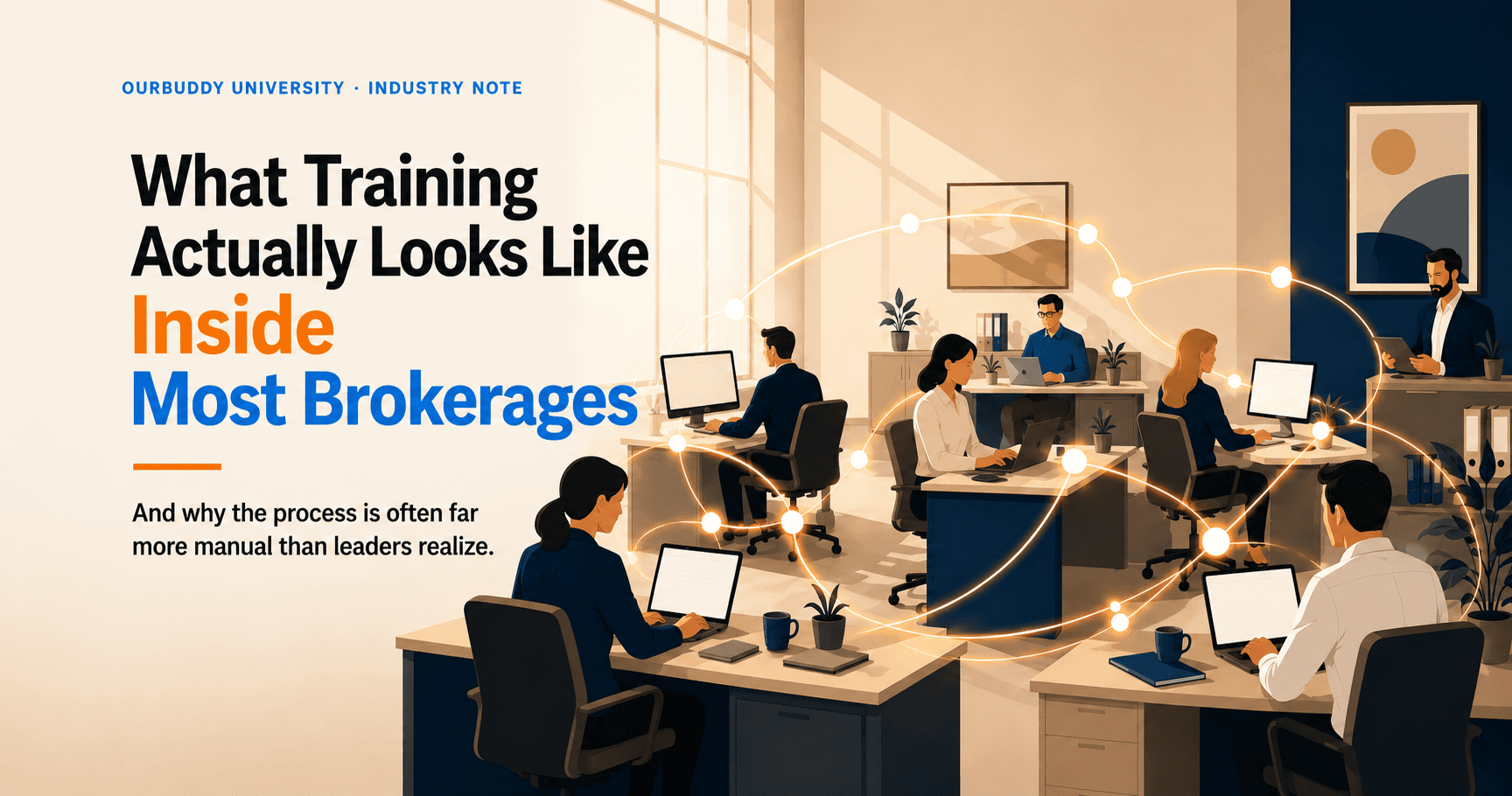
In most brokerages, training does not look broken.
New hires are learning. Sessions are happening. Questions are being answered. From the outside, the model appears to be working.
But that surface impression often hides a more expensive reality.
A brokerage may be carrying a meaningful amount of hidden training drag without ever isolating it clearly. The cost does not usually show up as a visible line item. It shows up in slower ramp to independence, repeated interruptions to experienced staff, rework, supervision, repeat support, and the time it takes to gather, build, update, and deliver training.
Individually, these costs may seem manageable. Together, they form a quiet layer of operational leakage.
Why the Number Stays Hidden
Most brokerages are disciplined about tracking obvious numbers. Compensation is watched. Revenue is tracked. Expenses are reviewed.
But the cost of how training actually happens inside the business is rarely measured with the same rigor, because it is spread across hours, people, and everyday activity rather than appearing as a single invoice.
That is why many brokerages continue absorbing this cost without ever fully seeing it.
What Training Drag Actually Looks Like
Training drag is not one dramatic failure. It is the accumulation of small inefficiencies inside the current model.
It appears when experienced people are pulled into repeat explanations. It appears when new hires take longer than expected to become independently productive. It appears when managers keep stepping in to correct work that should already be consistent. It appears when every important workflow update has to be manually gathered, interpreted, packaged, and rolled out again.
The issue is not effort. In most brokerages, people are working hard. The issue is that good effort is often being spent inside a model that creates too much avoidable friction.
The Two Layers Most Brokerages Carry
Underneath the surface, there are usually two layers of cost.
The first is delivery drag: the ongoing burden after training exists, including slower ramp, repeated questions, supervision, and standard drift.
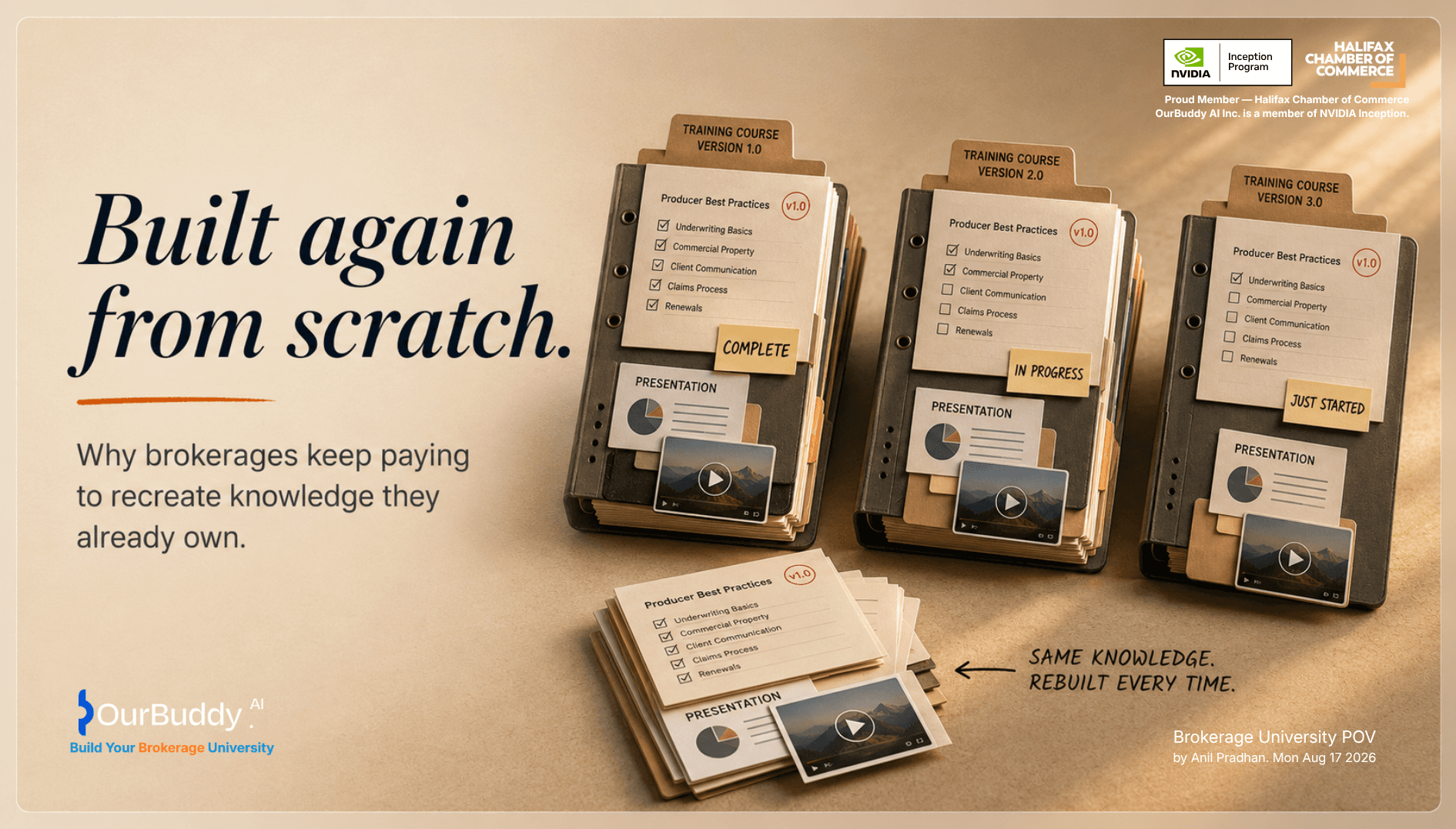
The second is build-time drag: the cost of creating and maintaining training in the first place, including collection, comprehension, packaging, coordination, delivery, and follow-up.
Most brokerages are carrying both at the same time.
If the organization hires regularly, operates across teams or branches, or deals with ongoing process and market change, this is no longer a minor inefficiency. It becomes a real operating cost.
Why We Built the Training Drag Diagnostic
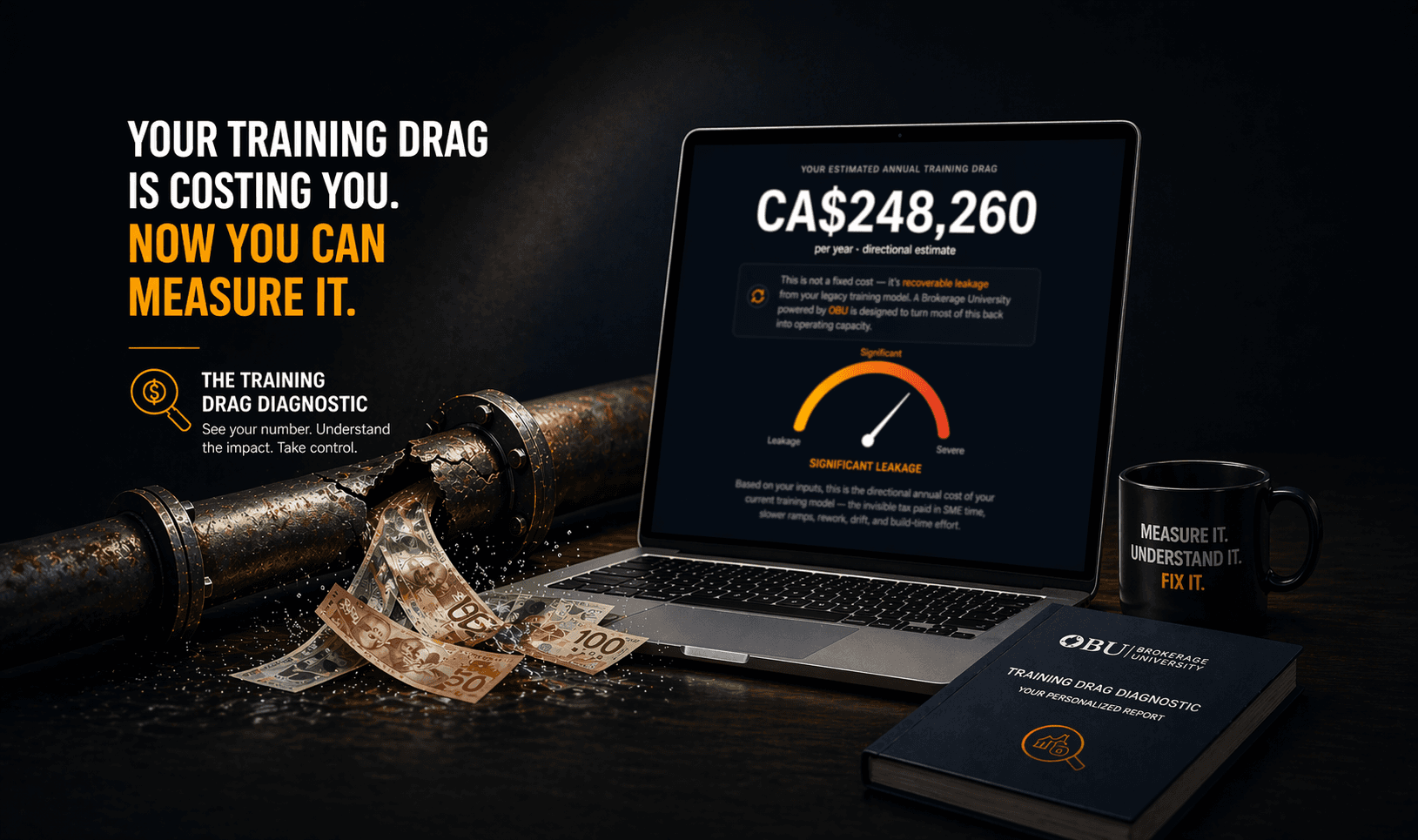
That is exactly why we built the Training Drag Diagnostic.
It is a directional tool designed to help brokerage leaders estimate what their current model may already be costing them. It does not attempt to make a precision ROI claim. Its purpose is to make a hidden cost pattern visible enough to evaluate.
If your brokerage is hiring, scaling, or relying heavily on SME time to keep training moving, this is worth understanding.
Run the diagnostic here: https://www.ourbuddy.ai/training-drag-diagnostic

A Better Question
Instead of asking, “Do we have training?” a brokerage may need to ask something more useful:
What is our current training model quietly costing us every week, every month, and every year we leave it unchanged?
Because the cost may already be there.
The only question is whether it is still hidden.
About the Author
Anil Pradhan is the Founder and CEO of OurBuddy.ai. A former broker turned operator, he writes about how brokerages can reduce training drag, improve role readiness, and build scalable internal learning systems.