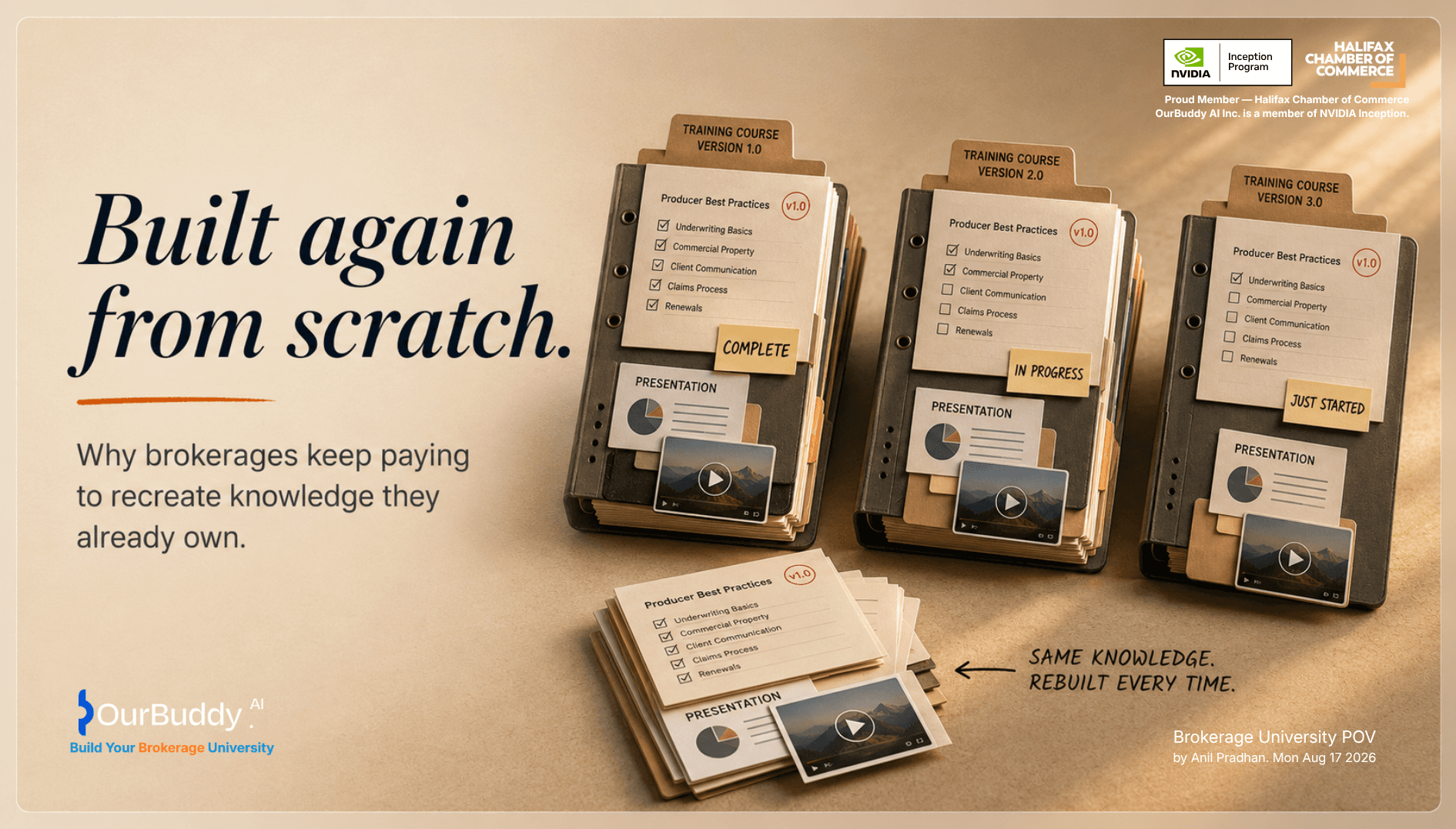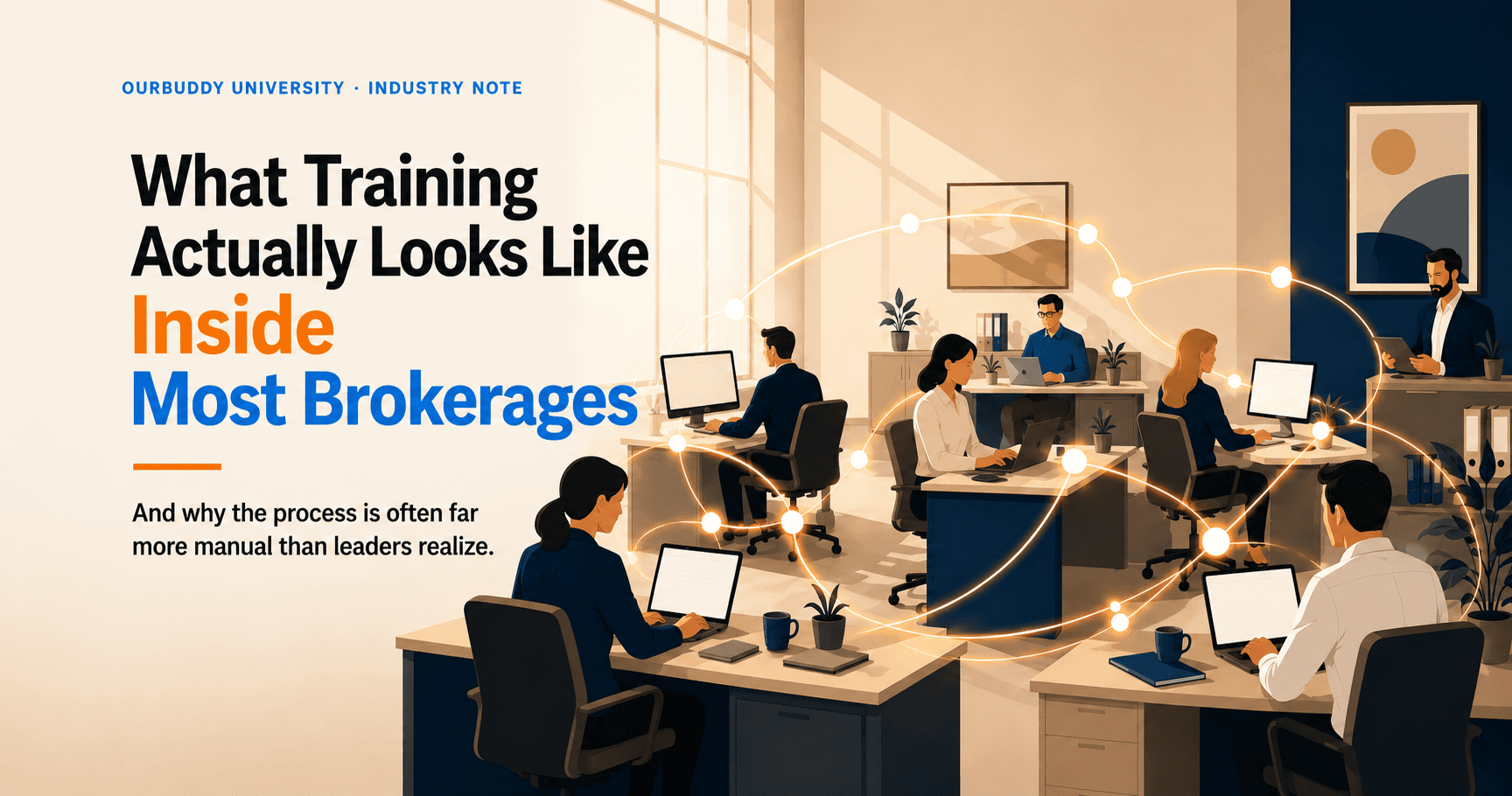

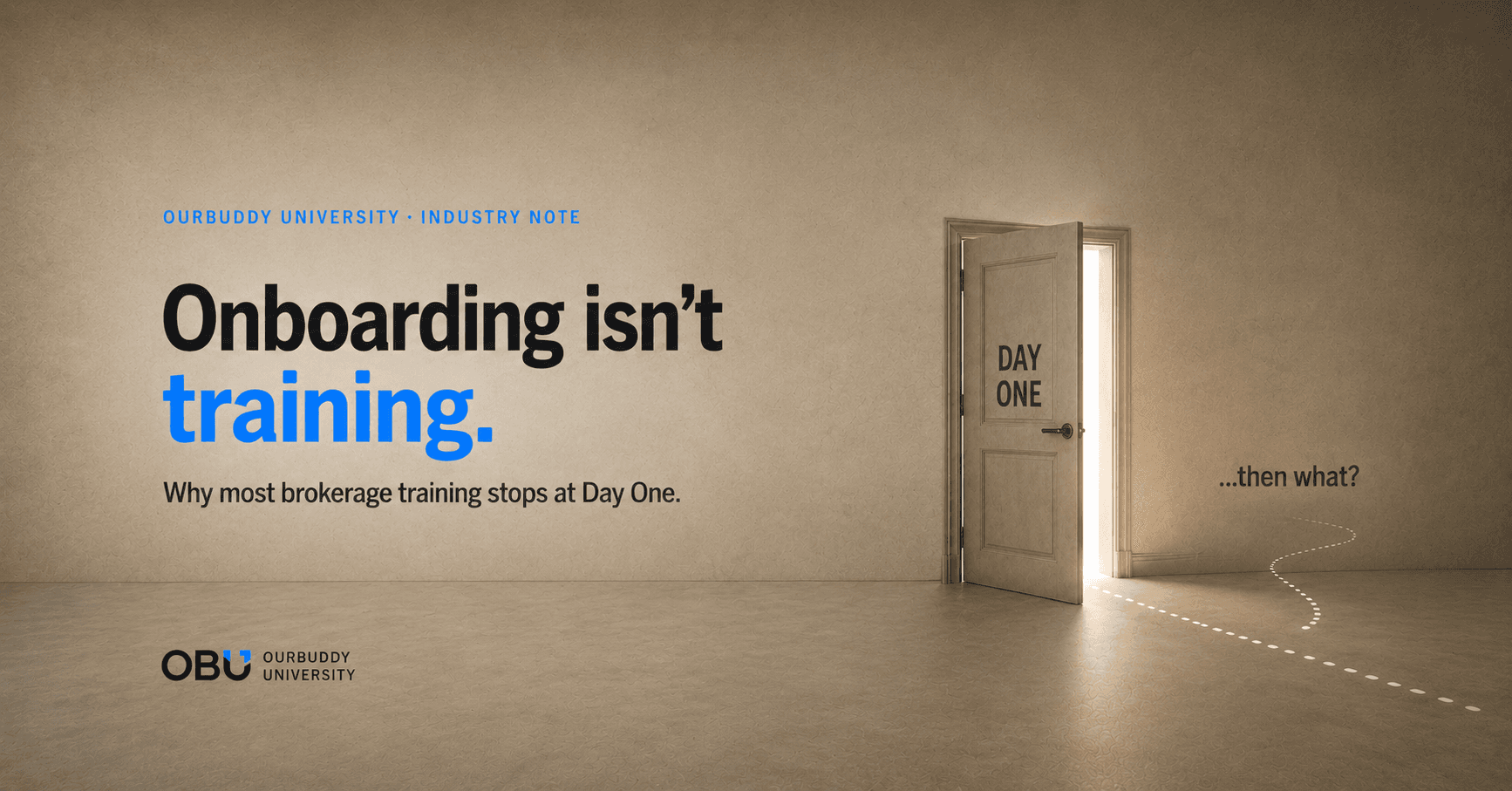
And why that becomes dangerous as the brokerage grows.
Walk into almost any Canadian P&C brokerage and ask about training. You will hear about onboarding. The first weeks. The systems walkthrough. The binder, the buddy, the checklist. All of it real. All of it useful.
Then ask what happens after that. The answer gets quieter. Usually it is some version of “they learn the rest on the job.”
That sentence is where the problem hides.
Onboarding is an event. Readiness is a system.
Most brokerage training is built around a single moment. The day a new person arrives. There is structure for that moment. After it passes, learning becomes whatever happens to happen. A producer picks up a carrier rule from whoever sits nearest. A CSR learns an endorsement by getting one wrong first. The standard stops being something the brokerage holds and becomes whatever each person absorbed on their way through.
That can feel fine in a small shop where everyone is within earshot. It stops feeling fine the moment the brokerage grows.
Why growth turns the gap into cost
Every new hire, every new branch, every carrier or compliance update adds variation. With onboarding-only training, there is no system to move that update evenly across the team. So it moves unevenly. One branch adopts the new process. Another keeps doing it the old way because nobody told them differently. A third invents its own version.
Multiply that across producers and across years. You do not get one brokerage operating one way. You get several slightly different brokerages wearing the same logo.
Experience is not the same as reinforcement
The usual defense is that people learn through experience. They do. But experience without structure produces uneven development. Two CSRs hired the same week, given the same desk, can end up with very different ideas of the right way five years later. Not because one is better. Because nobody was reinforcing a shared standard along the way.
Experience teaches. It just does not teach the same thing to everyone.
The question leaders eventually cannot answer
Most brokerage leaders can tell you who completed onboarding. Far fewer can tell you who actually understood the last three carrier changes. Or which branch is quietly drifting. Or where the gaps are before they show up in an error, a complaint, or a lost renewal.
That blind spot is not a people problem. It is a visibility problem. You cannot protect a standard you cannot see.
What the people running brokerages are seeing
Ask the people actually running brokerages and you hear the same thing in different words. After the first few weeks, readiness becomes whatever each person makes of it. The branch that adopted the new endorsement process and the one that never heard about it are both certain they are doing it right. Nobody set out to let the standard drift. It drifts because nothing holds it in place once onboarding ends.
This is where training drag accumulates
When training lives mostly at the start, reinforcement becomes reactive. Managers spend their time correcting instead of building. Updates land late and unevenly. Readiness gaps stack up quietly, one hire and one change at a time. The brokerage feels like training happened, while friction keeps growing underneath. That friction has a cost. Most brokerages have simply never put a number to it.
The shift the strongest brokerages are making
Training stops being onboarding and becomes something continuous. Reinforcement after the first weeks. Updates that reach everyone the same way. A way to see who is actually ready, not just who attended. None of this replaces experience. It gives experience a standard to build on, so growth makes the brokerage more consistent instead of less.
A better question
The question is no longer whether you onboarded them properly. It is how you are reinforcing readiness after onboarding ends.
If the honest answer is that you hope experience handles it, the training drag is already accumulating. You just have not seen the number yet.
Closing
Onboarding matters. Every brokerage knows that. The harder and more valuable question is what happens in the years after it.
If you want a directional sense of what your current model is costing in hidden training drag, the diagnostic walks through it in a few minutes. It will not hand you an audited figure. Nobody can audit a standard that lives in someone’s head. But it will help you see, roughly, what the drift is costing you. Our small way of helping an industry finally see a number it has carried quietly for too long.
Run the Training Drag Diagnostic: ourbuddy.ai/training-drag-diagnostic
Author bio: Anil Pradhan is a Halifax-based P&C broker turned training and operations leader, and co-founder of OurBuddy.ai. He works with Canadian brokerages on building internal "Brokerage University" systems to improve role readiness, consistency, and knowledge transfer across teams and locations.